
Ratherm air handling units (AHUs) utilize compressor-driven air-source heat pumps as an efficient heat source. This solution significantly reduces energy consumption compared to traditional methods of heating and cooling ventilation air. Furthermore, installing the heat pump as an independent module—rather than a fully integrated internal part of the unit—provides high flexibility. This allows the system to adapt to technological progress, changes in refrigerants, and new requirements imposed by evolving European regulations.
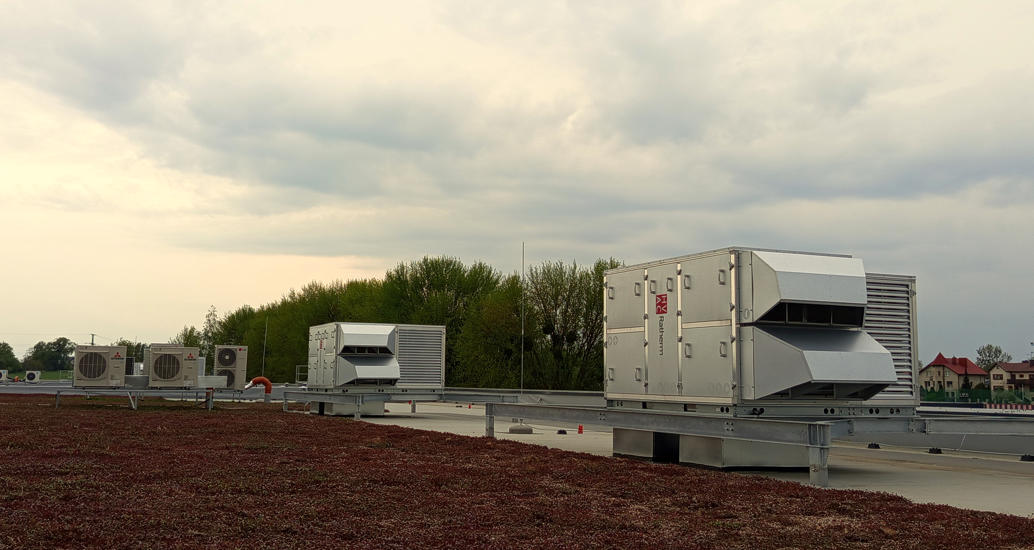
A compressor-driven air-source heat pump (air-to-air type) serves as a high-efficiency heat source within the AHU to heat fresh supply air in winter. In summer—operating in reverse mode—the same device cools the supply air, ensuring thermal comfort year-round. This device operates on the principle of a refrigerant cycle within a compressor system, much like an air conditioner. In practice, the heat pump extracts thermal energy from one air stream and transfers it to another.
As technology advances, heat pumps are becoming increasingly efficient and common in ventilation systems. Rising efficiency ratings mean that for every kilowatt-hour of electricity consumed, we obtain significantly more heating or cooling energy than from traditional electric heaters or water coils. The dynamic development of this technology has also led to lower investment and operational costs.
Implementing an air-source heat pump in a ventilation system translates into substantial energy savings and lower operating costs for the user. Unlike traditional heaters or combustion-based heating, a heat pump utilizes ambient heat and operates with higher efficiency. In practice, a correctly sized heat pump can reduce a facility's heating and cooling costs by up to several dozen percent annually.
This is also an environmentally friendly solution: reducing energy consumption directly leads to lower emissions of $CO_2$ and other greenhouse gases. Heat pumps do not generate local pollutants or exhaust fumes during operation, which is why they are recognized as a pro-ecological technology. They serve as an excellent alternative to traditional fossil fuel heat sources, contributing to reduced air pollution and the achievement of sustainable development goals.
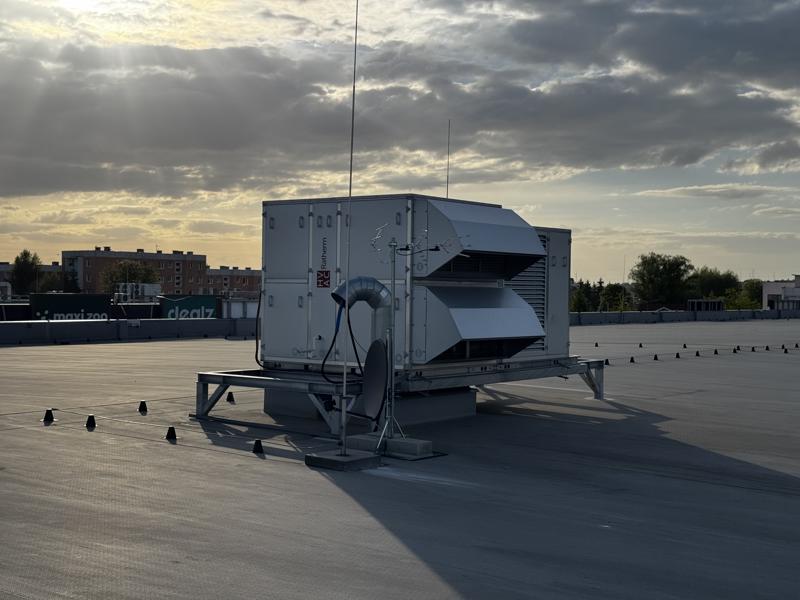
Independent Heat Pump Module – Flexibility in Installation and Upgrades
In Ratherm air handling units, the heat pump is installed as a separate module. It is not a fully integrated internal part of the unit but a distinct system component. This modular design offers significant advantages regarding installation, maintenance, and future upgrades. Firstly, an AHU with an external heat pump module retains full ventilation and heat recovery functionality, while the cooling system can be added or replaced as needed.
In the HVAC industry, two philosophies coexist: integrating the heat pump inside the unit or working with an independent external unit—both approaches effectively heat and cool the supply air. Our solution focuses on an external module (an inverter compressor unit), which allows for easier servicing and the eventual replacement of this component without interfering with other sections of the AHU. If a new generation of more efficient heat pumps emerges or a change in refrigerant is required, the independent module can be upgraded or replaced without the need to replace the entire air handling unit.
The integration of a compressor-driven air-source heat pump with an AHU allows for the highest energy efficiency in an HVAC system while maintaining flexibility for the future. This energy-saving and innovative solution not only lowers current heating and cooling costs but also ensures that the installation is prepared for upcoming technological and regulatory changes. Consequently, our partners receive a ventilation system that combines high efficiency, environmental care, and the ability to adapt to future requirements—making it a secure and future-proof investment.